
9 Psychological Signals Most People Don't Notice
Most people think they're paying attention. They're not. Here's what they're missing.
ADVERTISEMENT — SPONSORED CONTENT
Most people think they're paying attention to the people around them. They're not.
They're listening to words — the most rehearsed, most filtered, most controlled thing a person can produce. Meanwhile, the real communication is happening somewhere else entirely: in a glance that lasts half a second, a shift in posture that happens before the thought is even conscious, a micro-expression that vanishes before most people's brains register it.
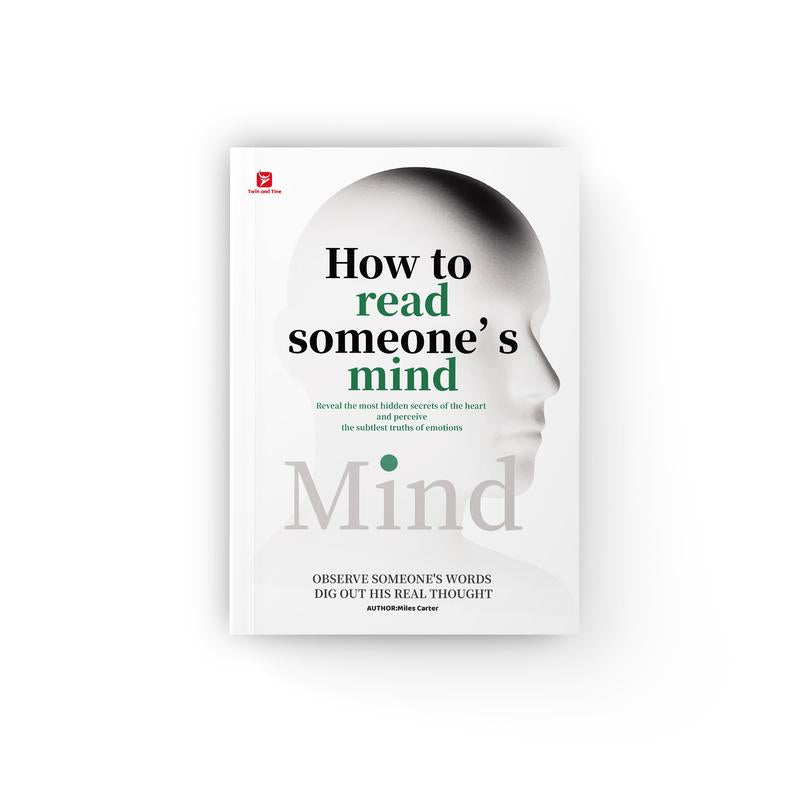
These are the signals that "How to Read Someone's Mind" is built around. Not tricks. Not manipulation tactics. Observable, specific behavioral cues — the kind you can notice starting today, in the next conversation you have.
Here are 9 of them.

When people laugh together, their eyes reveal who they actually trust.
When a group laughs at something, each person instinctively glances — for just a fraction of a second — at the person they feel closest to or most want approval from. The movement is involuntary. Most people in the room never notice it. Once you know what to look for, you'll see it every time.
Buy 2 & save more · 30-day satisfaction guarantee · Secure checkout

People who are constructing a lie tend to look up first, then left.
When someone is visually constructing something — imagining or fabricating — their eyes typically move up and to their right (your left as you face them). When they're genuinely recalling something, the movement tends to go laterally or downward. This is not a foolproof lie detector. But it's a behavioral pattern worth knowing — and one most people have never been told about.
The book explains why this happens neurologically, what to watch for, and — critically — why context matters before you draw any conclusion. A single cue is never enough. That's what separates observation from assumption.

If someone is mirroring your posture, they're more engaged than they're showing.
Mirroring — the unconscious matching of another person's body position, gesture, or speech rhythm — is one of the clearest signals of genuine interest or rapport. People do it without thinking. When it's absent, that's information too.

If you think someone was staring at you, glance at your watch. Their response tells you.
Look at your watch or the back of your hand. If someone was actually watching you, they'll often subconsciously glance at their own watch or hand within a second or two. You can test this today. In a meeting, on public transport, anywhere.
This is exactly the kind of observation the book delivers: immediately applicable, requiring nothing except your attention.
Buy 2 & save more · Secure checkout · Limited time pricing
The readers who get the most from this book were already paying closer attention than most people.
This isn't a book for people who feel completely lost in social situations. The readers who describe the biggest shifts are the ones who were already curious about human behavior — who already noticed things others missed, but lacked the framework to interpret what they were seeing.
Nodding slightly while you speak creates a subtle pull toward agreement — and most people use it without knowing.
When you nod slightly while making a point, the person listening tends to nod back — unconsciously. Skilled communicators do this instinctively. Most people who read about it once start noticing it everywhere.
Join 10,000+ readers · Buy 2 & save more · 30-day guarantee

A frown that lasts less than a second when you share good news often means envy, not discomfort.
You share something positive — a promotion, a win, good news — and for a fraction of a second, someone's brows contract. Then it's gone. Most people never register it. But eyebrow contractions that appear briefly when good news is shared are among the microexpressions most associated with envy.
The book is careful on this — a single expression in isolation means little. But patterns across a conversation? Those mean something. And once you know what you're looking at, you start seeing them clearly.
Ask someone a hard question right before rock-paper-scissors and they'll usually throw scissors.
When someone's mind is occupied — processing a question they can't easily answer — their working memory is loaded. Under cognitive load, people tend to default to familiar patterns. Scissors is the statistically favored throw under distraction.
If this doesn't change how you read the next conversation you have, return it. No questions.
Most readers describe noticing something different within the first chapter. Not because the book is full of tricks — because it gives a framework for what's already happening in every conversation around you. Once you have the framework, you can't turn it off.
Return it within 30 days for a full refund if nothing shifts. Free shipping both ways. No questions asked.
This book is not for everyone.
Don't buy if you...
Want manipulation tactics or "dark psychology" tricks
Are looking for a quick script to memorize
Won't actually pay attention in real conversations
Do buy if you...
Already notice things others miss — and want to understand them
Replay conversations wondering what was really meant
Want to understand people better, not control them
Buy 2 & save more · Buy 3 & save even more · Secure checkout · 30-day guarantee
Results based on reader feedback. Individual experience may vary.